
Exploring Advanced Gravitational Wave Detection on the Moon
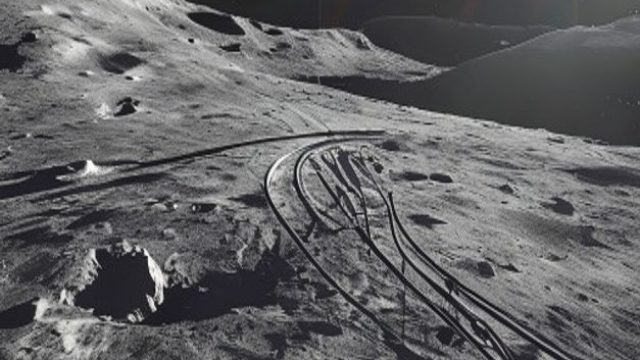
As the world of astrophysics continues to evolve, significant advancements are being made in the field of gravitational wave detection. A recent seminar highlighted the innovative research surrounding the Laser Interferometer Lunar Antenna, set to operate on the Moon. This technology represents a vital leap in our understanding of the universe, creating a pathway towards enhanced detection of gravitational waves. As the demand for accurate cosmic measurements grows, so does the relevance of this groundbreaking research.
The Importance of Gravitational Waves in Modern Astronomy
Gravitational waves, ripples in the fabric of spacetime caused by massive cosmic events, play a crucial role in our understanding of the universe. They allow scientists to observe phenomena that are otherwise invisible, enhancing our comprehension of black holes, neutron stars, and the early universe. The detection of these waves is essential for validating Einstein's theory of general relativity and exploring the depths of cosmic mysteries.
The Need for Improved Detection Methods
Current gravitational wave detectors on Earth, while revolutionary, face limitations due to noise and local interference. These challenges hinder the ability to capture fainter signals that originate from distant cosmic events. The proposed Laser Interferometer Lunar Antenna seeks to address these issues by leveraging the Moon's stable environment, free from the disturbances that affect terrestrial detectors.
Introducing the Laser Interferometer Lunar Antenna
The Laser Interferometer Lunar Antenna (LILA) will utilize advanced technology to detect sub-Hertz gravitational waves, filling a critical gap in the observational spectrum. By placing this sophisticated instrument on the Moon, researchers can significantly reduce the noise levels that currently plague Earth-based detectors.
Key Features of the Lunar Antenna
- Low Noise Environment: The Moon's lack of atmosphere and minimal seismic activity create an ideal setting for precise measurements.
- Innovative Technology: Employing state-of-the-art laser interferometry, LILA promises to provide unprecedented sensitivity to gravitational waves.
- Broader Detection Capability: This technology aims to capture a wider range of frequencies, opening up new possibilities for research.
Significance of the Seminar and Future Aspirations
The seminar, led by Volker Quetschke from the University of Texas Rio Grande Valley, emphasized the urgent need for advancing gravitational wave detection techniques. With the LILA project, the potential for groundbreaking discoveries increases exponentially. As the scientific community shifts focus towards extraterrestrial instruments, we stand on the brink of a new era in astronomy.
What’s Next for Gravitational Wave Research?
In the coming years, we can expect further developments in space-based gravitational wave observatories. The insights gained from these endeavors will not only enhance our understanding of cosmic events but may also lead to revolutionary discoveries about the nature of our universe.
Conclusion: The Future of Astronomy is Lunar
The emergence of lunar gravitational wave detection technology signifies a pivotal moment in the field of astrophysics. As researchers prepare to deploy the Laser Interferometer Lunar Antenna, the potential for new cosmic revelations is vast. By embracing the challenges presented by space and expanding our observational capabilities, we will continue to deepen our understanding of the universe. The journey into the cosmic unknown is just beginning, and the Moon may hold the keys to unlocking its most profound secrets.