
ASEAN's Shifting Strategies for Myanmar: What’s Next?
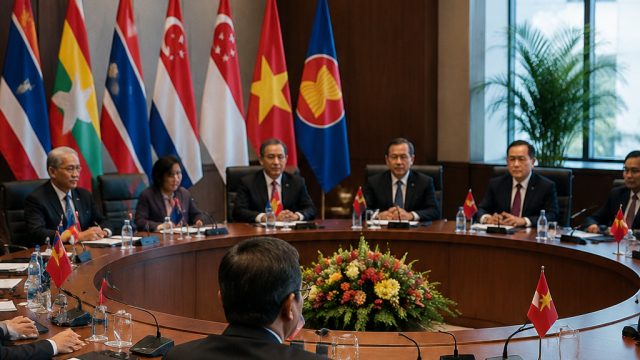
The Association of Southeast Asian Nations (ASEAN) has recently ramped up its engagement with Myanmar, a move that holds significant implications for the region's political landscape. As tensions rise and the military junta continues to consolidate power, the effectiveness of ASEAN's strategies in steering Myanmar towards stability has become a pressing concern. This article delves into the intricacies of ASEAN's renewed approach and its potential impact on Myanmar's future.
The Current Political Climate in Myanmar
Since the military coup in February 2021, Myanmar has experienced a surge in violence and civil unrest. The National Unity Government (NUG), formed by ousted lawmakers, has garnered support from various ethnic armed groups and a significant portion of the population, advocating for federal democracy. With such a fragmented political landscape, the question arises: how can ASEAN contribute to a resolution?
Challenges Faced by ASEAN
- Legitimacy Issues: The military junta's refusal to engage with ASEAN representatives has cast doubt on the organization's role as a mediator.
- Geopolitical Pressures: Regional powers, particularly China and India, influence ASEAN's ability to act decisively.
- Internal Disagreements: Member states have differing perspectives on how to address the Myanmar crisis, complicating a unified response.
ASEAN's Renewed Engagement Strategies
In light of these challenges, ASEAN has been recalibrating its strategies for dealing with Myanmar. The organization is focusing on building dialogue pathways that include various stakeholders, from ethnic groups to civil society. This multi-faceted approach aims to foster trust and pave the way for constructive discussions.
Key Strategies Under Consideration
- Inclusive Dialogue: Engaging a broader spectrum of Myanmar's political landscape, including voices from the NUG and ethnic groups, to facilitate a platform for discussion.
- Humanitarian Assistance: Prioritizing humanitarian aid to mitigate the suffering of the Myanmar populace during the ongoing crisis.
- Regional Cooperation: Collaborating with neighboring countries to ensure a unified front in addressing the implications of instability in Myanmar.
Why This Matters Now
As the situation in Myanmar continues to evolve, the ramifications of ASEAN's engagement strategies could have long-lasting effects not just within Myanmar but across the entire Southeast Asian region. The potential for spillover effects, from refugee crises to economic instability, makes it imperative for ASEAN to act decisively.
Looking Ahead: The Role of International Community
The global response to ASEAN’s initiatives will also play a critical role in shaping Myanmar's future. As international powers monitor the situation, the collaboration between ASEAN and external actors can create a more robust support network for Myanmar’s democratic movement.
Conclusion
ASEAN's renewed engagement with Myanmar is both a challenge and an opportunity. It presents a pivotal moment for the association to showcase its capabilities in conflict resolution and regional stability. As the political landscape continues to shift, the world will be watching closely to see if ASEAN can navigate these turbulent waters effectively.
At Zolmica, we remain committed to bringing you timely insights on regional developments. Stay tuned as we continue to monitor ASEAN's efforts and their implications for Myanmar and the broader Southeast Asian region.
Industry Partner Network
You May Also Like
Contact information:
02088888888
Email:rekhamonikaraja@gmail.com
Q Q:88888888


